

For most C-suite executives, artificial intelligence has shifted from an inspiring strategy slide to a demanding line item on the annual budget. Every enterprise software vendor claims to embed proprietary machine learning models, and every department head wants funding for an automated pilot.
Yet, despite surging spend, the vast majority of custom AI and machine learning initiatives fail to move beyond experimental sandbox deployments.
Unlocking sustainable ROI from AI/ML solutions isn’t about deploying the largest foundation model available. It requires a disciplined decision-making framework that evaluates technical feasibility, resource strategy, and long-term cost governance before writing a single line of code.
Cutting Through the Noise: The AI/ML Feasibility Matrix
Before committing budget to an internal machine learning build, decision-makers must distinguish between problems that genuinely require intelligent pattern recognition and those best solved through standard software automation.
A practical enterprise evaluation matrix measures two core variables: Business Impact and Data Readiness.
| High Data Readiness / Clean Pipelines | Low Data Readiness / Messy Data | |
| High Business Impact | Quadrant 1: High-ROI Quick Wins
• High value, clean data pipelines • Immediate focus for ML deployment |
Quadrant 2: Strategic Investment
• High value, complex data • Requires custom ML engineering & data cleanup |
| Low Business Impact | Quadrant 3: Deterministic Rules
• Low value, structured data • Use standard API / RPA rules automation |
Quadrant 4: Deprioritize
• Low value, messy data • Avoid allocation of resources |
Build, Buy, or Augment? Navigating the Trade-Offs
One of the most expensive mistakes enterprise leaders make is default internal development. Building proprietary ML models from scratch requires deep data engineering, dedicated infrastructure management, and specialized talent that commands top-market compensation.
When evaluating your implementation path, weigh the three primary resource strategies:
| Strategy | Ideal Use Case | Strategic Trade-Off |
| Buy (Off-the-Shelf) | Commodity functions (e.g., standard OCR, basic email routing, general document search). | Fast time-to-market, but zero proprietary moat and limited customization for unique workflows. |
| Build (Custom In-House) | Core intellectual property or domain-specific logic that directly differentiates your product. | Full ownership and custom alignment, but high capital expenditure, slow execution, and significant maintenance risk. |
| Augment (Hybrid Partnering) | Enterprise-scale deployment requiring custom architecture combined with accelerated execution. | Combines internal domain expertise with external performance engineering and specialized IT staff to bypass hiring bottlenecks. |
For most mid-market and enterprise organizations, the hybrid augmentation model offers the highest risk-adjusted ROI, thus enabling teams to build tailored solutions without over-hiring permanent overhead.
Mitigating the Hidden Costs: Performance Engineering & Governance
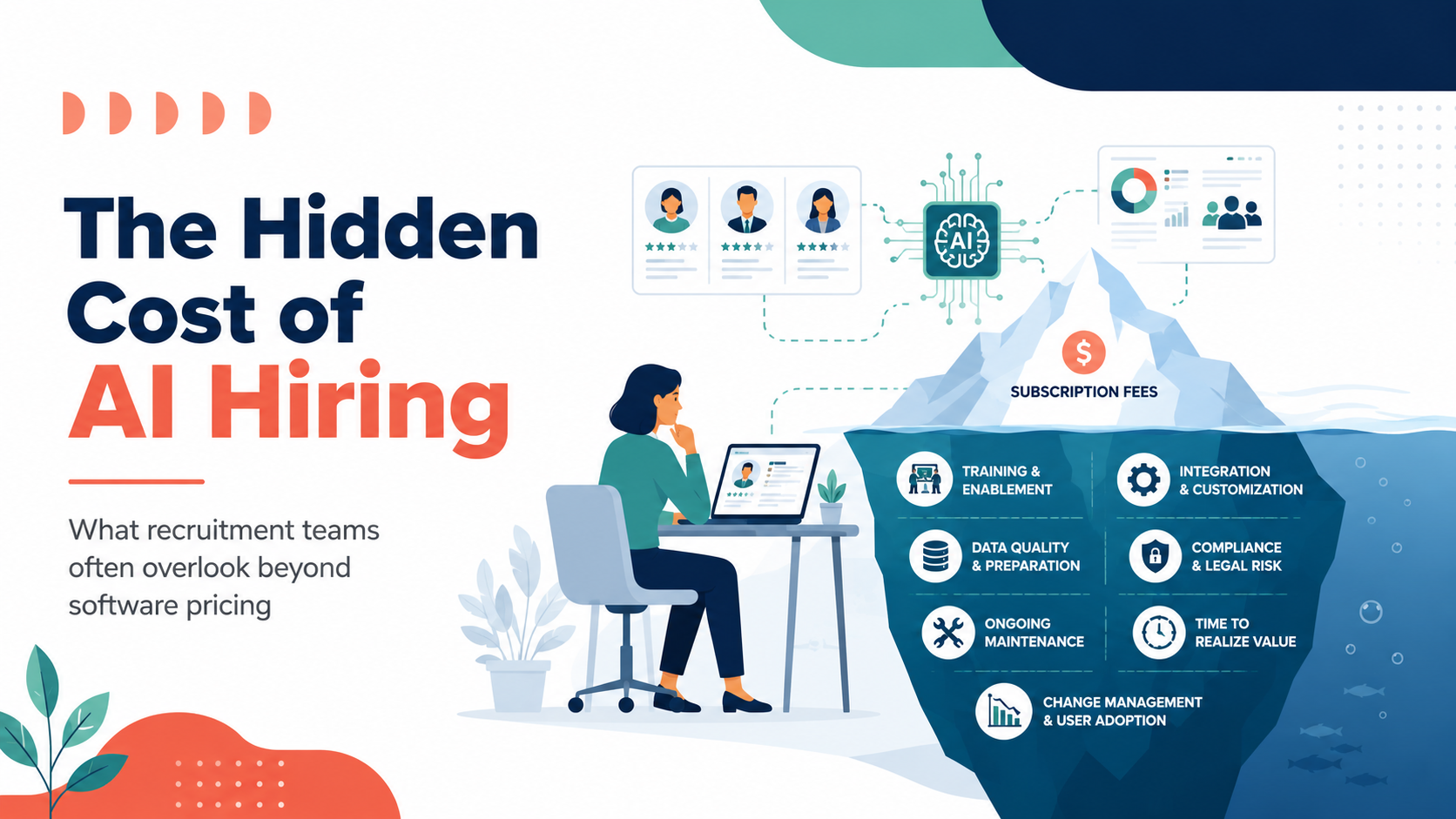
Deploying a model to production is only the beginning of the cost curve. As inference volume scales across thousands of daily operational queries, compute overhead and latency bottlenecks can quickly erode expected project margins.
Managing long-term operational risk requires strict execution discipline in three areas:
- Compute & Token Governance: Optimizing model size, prompt routing, and query caching so infrastructure spend scales predictably alongside business growth.
- Model Latency Optimization: Applying performance engineering to ensure algorithms deliver inference within acceptable operational windows for front-line teams.
- Continuous Monitoring: Implementing automated pipelines to detect data drift, model decay, and security vulnerabilities before they impact business outcomes.
Consuming Complexity with Jay Analytix
Building and scaling custom AI/ML solutions shouldn’t require your leadership team to manage fragmented vendor stacks or navigate endless hiring cycles.
At Jay Analytix, we consume technical complexity to deliver operational simplicity. By unifying AI/ML Integration, robust Data Solutions, rigorous Performance Engineering, and specialized IT Staff Augmentation, we help enterprise leaders design, deploy, and optimize intelligent systems that deliver measurable bottom-line value.
Whether you need to evaluate project feasibility, optimize model performance, or scale your engineering capacity with senior technical talent, we provide the execution discipline needed to turn AI ambition into sustainable business performance.